
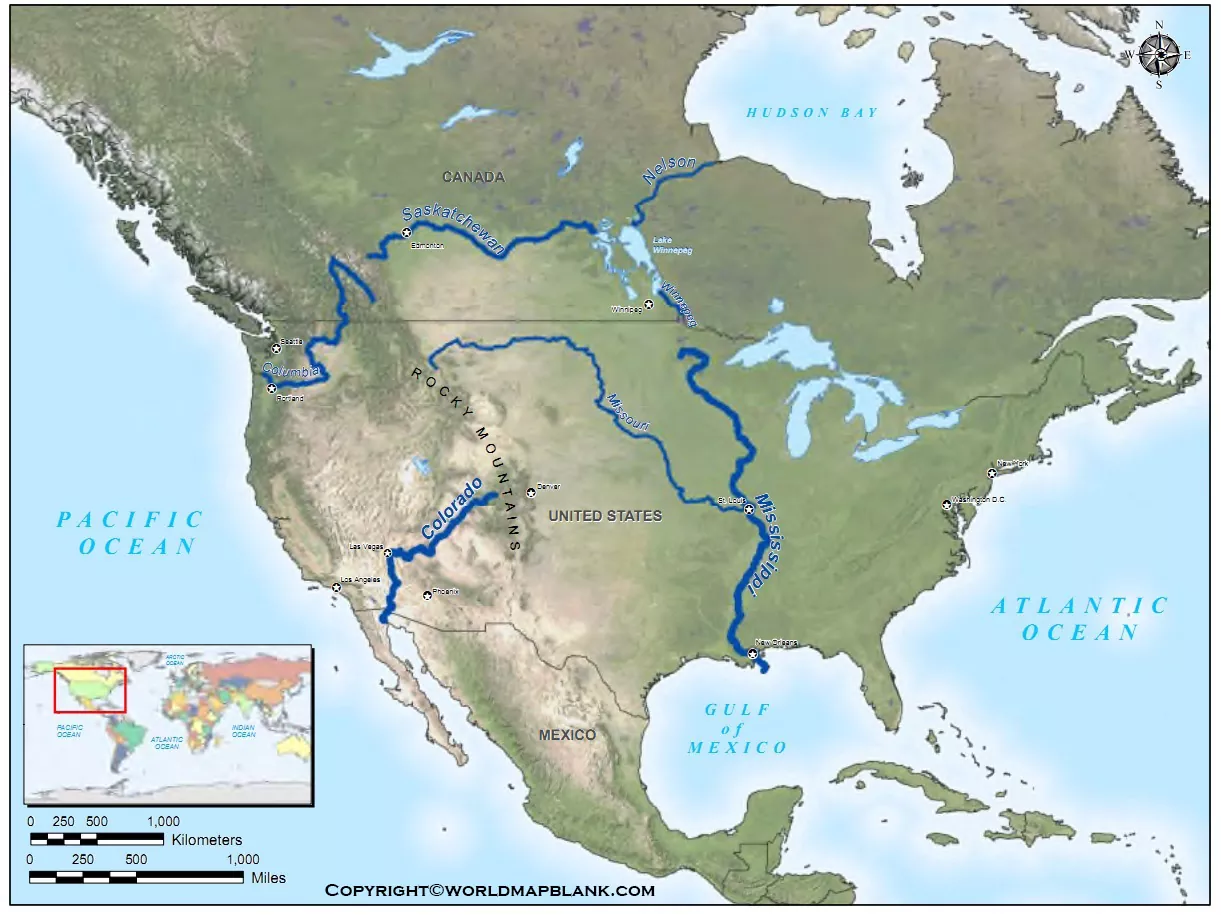

Explore the North America Rivers Map to identify major rivers, understand river systems, and study the continent’s physical geography. This article includes printable river maps, labeled map options, and PDF files for students, teachers, parents, and geography enthusiasts.
Use these maps to locate important rivers, trace their general courses, and understand how rivers connect mountains, lakes, plains, wetlands, and oceans.
North America Rivers Map
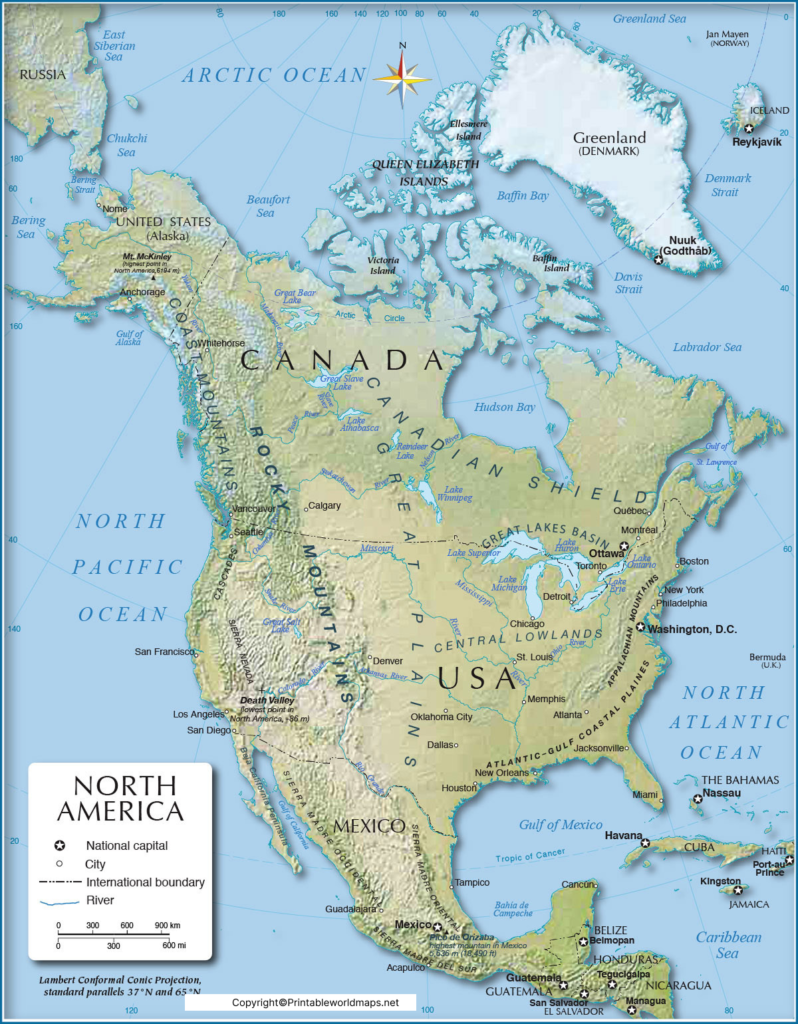
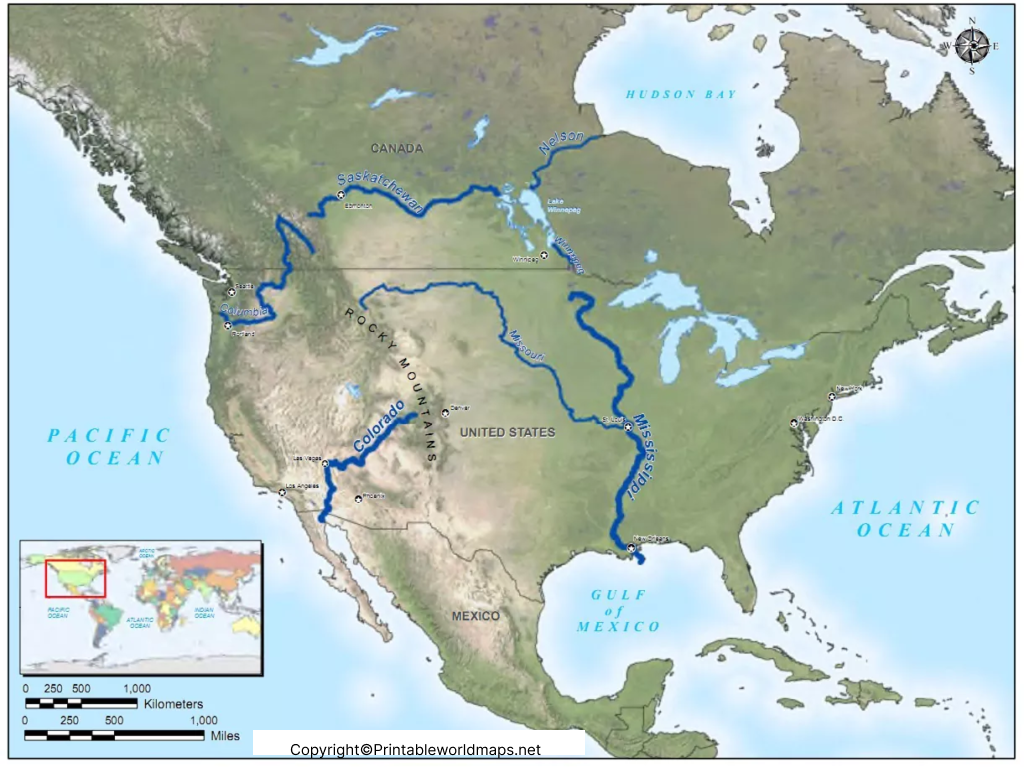
The North America Rivers Map highlights the continent’s river geography and helps readers locate major waterways. North America contains a wide range of river systems, from northern rivers that flow through cold subarctic regions to waterways that cross temperate forests, grasslands, deserts, and tropical landscapes.
Major rivers include the Mississippi, Missouri, Mackenzie, Yukon, St. Lawrence, Colorado, Columbia, and Rio Grande. Their routes, tributaries, and drainage basins are important for understanding the continent’s geography, water resources, transportation, agriculture, and ecosystems.
Printable North America Rivers Map
A printable North America Rivers Map is useful for geography lessons, classroom activities, homework, and independent study. Use the map to identify rivers and compare their locations with surrounding countries, mountain ranges, lakes, and coastlines.
For an effective learning activity, print the map and ask students to label selected rivers, mark their approximate sources and mouths, and identify the bodies of water into which they flow.
Remember that a river’s source is its starting point, while its mouth is where it enters another river, a lake, a sea, or an ocean. A river does not necessarily flow directly into the ocean.
Map of North America Rivers
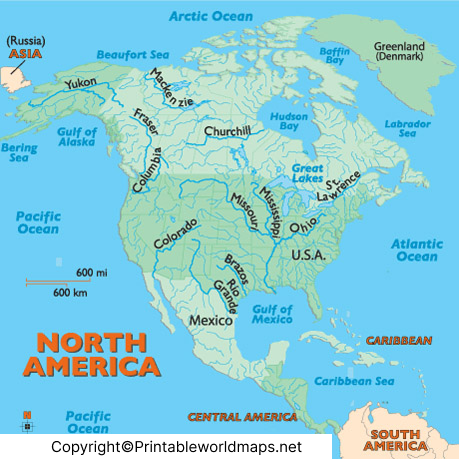
The map of North America rivers provides a geographical overview of the continent’s waterways. Rivers are interconnected through tributaries and larger river systems, which collect and transport water across extensive drainage basins.
The Mississippi River system is particularly significant in the central United States. The Missouri River joins the Mississippi, and the combined river system carries water southward toward the Gulf of Mexico. The St. Lawrence River connects the Great Lakes system with the Atlantic Ocean, while the Mackenzie River flows northward through Canada’s Northwest Territories toward the Arctic Ocean.
These different flow directions demonstrate how land elevation, regional topography, and drainage divides influence river geography.
Map of North America Rivers Labeled
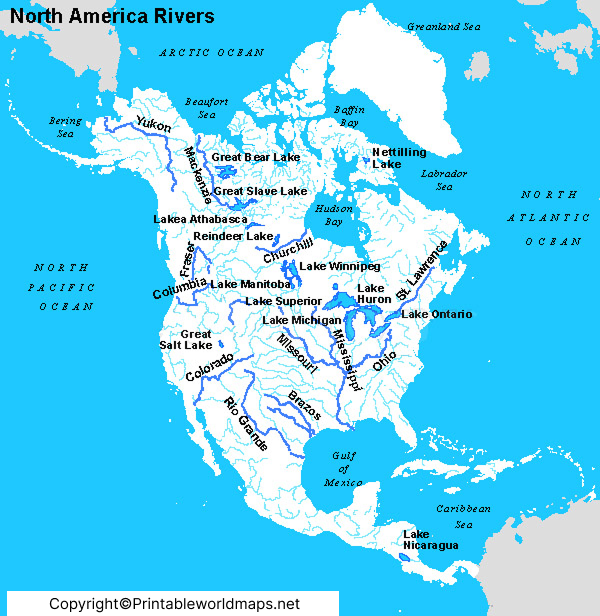
A labeled North America Rivers Map helps readers connect river names with their geographical locations. It can support school assignments, map-reading practice, geography quizzes, and revision for examinations.
Use the labeled map to locate important waterways such as the Mississippi, Missouri, Yukon, Mackenzie, St. Lawrence, Colorado, Columbia, and Rio Grande. Compare the rivers’ routes and identify the regions and bodies of water associated with each one.
For additional practice, try identifying the rivers on a blank map before checking your answers against the labeled version.
7 Amazing Facts About North American Rivers
1. The Mississippi River system covers a vast area
The Mississippi River and its tributaries drain a large part of the United States. Its watershed extends across a wide range of landscapes and supports communities, agriculture, wildlife, and commercial navigation.
2. The Missouri River is longer than the Mississippi River alone
The Missouri River is commonly listed as longer than the Mississippi River when each river is measured separately. The Missouri joins the Mississippi, forming part of the extensive Mississippi–Missouri river system. Reported lengths depend on how river sources and channels are measured.
3. The Mackenzie River flows toward the Arctic Ocean
The Mackenzie River is one of Canada’s major northern waterways. Its basin covers approximately 1.8 million square kilometres and includes parts of several provinces and territories. The river drains northward into the Arctic Ocean.
4. The St. Lawrence River links the Great Lakes to the Atlantic
The St. Lawrence River is a major waterway connecting the Great Lakes with the Atlantic Ocean. Together with the St. Lawrence Seaway, it supports commercial shipping between inland ports and the Atlantic.
5. The Colorado River crosses arid landscapes
The Colorado River flows through parts of the southwestern United States and Mexico. It has shaped prominent landscapes, including the Grand Canyon, and provides water for cities, agriculture, and ecosystems across a largely dry region.
6. Rivers can flow in different directions
North American rivers do not all flow southward. The Mackenzie River flows north toward the Arctic Ocean, while the Mississippi flows generally south toward the Gulf of Mexico. River direction depends on the elevation and shape of the surrounding land.
7. A watershed includes more than the main river
A watershed, also called a drainage basin, is the area of land from which water drains toward a common outlet. It includes the main river, its tributaries, and the land that supplies them with water. Watershed boundaries often follow ridges and other high ground.
Major Rivers of North America
The following examples are useful starting points when studying the North America Rivers Map.
| River | General location | Drainage destination or significance |
|---|---|---|
| Mississippi River | Central United States | Gulf of Mexico |
| Missouri River | Western and central United States | Mississippi River |
| Mackenzie River | Northwestern Canada | Arctic Ocean |
| Yukon River | Northwestern North America | Bering Sea |
| St. Lawrence River | Great Lakes region and eastern Canada | Gulf of St. Lawrence and Atlantic Ocean |
| Colorado River | Southwestern United States and Mexico | Historically reaches the Gulf of California, though its flow to the sea is often interrupted |
| Columbia River | Western Canada and northwestern United States | Pacific Ocean |
| Rio Grande | United States–Mexico border region | Gulf of Mexico |
River lengths, endpoints, and drainage classifications can differ among sources and measurement methods. Use authoritative geographic references when precise measurements are required.
How to Use a North America Rivers Map for Learning
A printable river map can make physical geography easier to understand.
- For students: Locate and memorize major rivers, then test your knowledge using a blank map.
- For teachers: Use the labeled map to explain tributaries, river sources, mouths, and drainage basins.
- For parents: Encourage children to identify rivers and connect them with countries, states, provinces, and oceans.
- For geography enthusiasts: Compare northern, central, and western river systems and explore how topography influences drainage.
- For researchers: Use the map as a starting point, then consult official hydrographic datasets for precise river locations and watershed boundaries.
Why North American Rivers Matter
Rivers provide freshwater, support aquatic habitats, supply water for irrigation and industry, and help transport goods. Their floodplains and wetlands can support rich biodiversity, while dams and reservoirs can contribute to water storage and hydroelectric power.
River systems also face challenges such as pollution, habitat fragmentation, water withdrawals, flooding, drought, and climate-related changes. Understanding river geography helps explain why water management often requires cooperation across state, provincial, territorial, and international boundaries.
Frequently Asked Questions
1. What are the major rivers of North America?
Major rivers include the Mississippi, Missouri, Mackenzie, Yukon, St. Lawrence, Colorado, Columbia, and Rio Grande. Their importance varies according to length, drainage area, water flow, and regional use.
2. Where can I download a North America Rivers Map PDF?
You can download the printable maps provided in this article. Select the PDF link beneath the map you want to use.
3. What is a labeled North America Rivers Map used for?
A labeled map helps students, teachers, and geography enthusiasts identify river names and locations. It is useful for classroom assignments, map-reading practice, and geography revision.
4. Which is the longest river in North America?
The Missouri River is commonly identified as the longest individual river in North America. When the Mississippi and Missouri are considered together as a river system, the combined system is longer. Exact rankings depend on the measurement method.
5. Which North American river flows into the Arctic Ocean?
The Mackenzie River flows north through Canada’s Northwest Territories and empties into the Arctic Ocean.
6. What is a river watershed?
A watershed is the land area that drains rainfall and other surface water toward a common outlet. It includes the main river, tributaries, and the surrounding drainage area.
7. Are these North America river maps suitable for school projects?
Yes. The printable and labeled maps can be useful for school projects, geography worksheets, and independent study. Check the map labels and consult reliable references when exact geographical details are required.
Reference links
https://www.usgs.gov/water-science-school/science/rivers-world-worlds-longest-rivers
https://www.usgs.gov/water-science-school/science/watersheds-and-drainage-basins
https://www.usgs.gov/mission-areas/water-resources/great-american-waterways
https://education.nationalgeographic.org/resource/understanding-rivers
https://education.nationalgeographic.org/resource/north-america-physical-geography
